
Silicon Valley Byte Size - The Allianz Technology Trust Podcast
Beyond the moonshot: why connectivity is the biggest space tech investment opportunity

Watch the video
Listen to the podcast
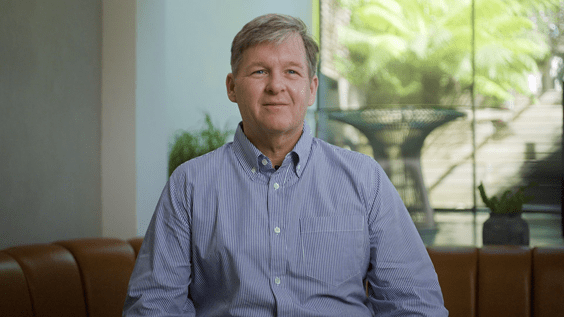
In this episode of Silicon Valley Bite Size, Mike Seidenberg, lead manager of Allianz Technology Trust, explores why the real opportunity in space lies in connectivity, not exploration.
He highlights how falling launch costs, reusable rockets and more powerful satellites are reshaping economics, with networks like Starlink enabling new business models by expanding global access to information. The discussion also touches on productivity gains, resilience and emerging consumer use cases, alongside the investment outlook — including strong launch demand, potential IPO activity and the need for discipline amid the hype.
Listen to discover why space’s biggest opportunity may be connecting more of Earth, not leaving it.
MS: When you have information, you have an advantage and therefore many are willing to pay for it. People's ability to worry about things never ceases to amaze me. The most interesting aspect of the space story is the ability for millions of people that don't have access to have that access.
CR: Hi, I'm Cherry Reynard, and welcome to Silicon Valley Bite Size, where we discuss, chew over and get into the weeds of some of the biggest trends in tech investing. In this episode, we want to explore the subject of space and satellite technology. NASA's awe inspiring Artemis II mission may only be a recent memory, and for many people, space tech can sound futuristic, even speculative. But beneath the headlines, something very practical is happening. Satellite networks are making it possible to access information and connectivity in places where it simply wasn't available before. So, what does this all mean from an investment perspective? I'm joined by Mike Seidenberg, lead manager of the Allianz Technology Trust. Mike, great to have you here.
MS: It's great to be here.
CR: So, Mike, I think when people hear space tech, they're thinking of moonshots and big headlines like Artemis II. What's the more practical investment story here?
MS: The practical investment story here is really one around reusability, leveraging technology to efficiently launch satellites and other things into orbit. And then obviously, because we have such powerful chips, we're able to shrink that form factor around satellites and put them into orbit and create really compelling value propositions for potential customers. So, it's a totally different paradigm with respect to how space used to be thought of with government agencies. This is real commercialisation and utilisation of rockets in order to drive systems into orbit that people are going to pay for.
CR: And that sort of thing of putting stuff in space has become much cheaper.
MS: Much cheaper. I mean, I don't know about you, but when I actually see SpaceX land a rocket, I mean, my head just pops off. It is just what is required in order to facilitate that and to execute on that is really mind boggling.
MS: Having said, even with that, their goal and others like them is to continue to bring down the cost per kilo of launching things. And you have just this backlog that they're seeing across the industry, where there are just a lot of things that people want to put into orbit because they see new and innovative business models, if they have access to satellite networks and the like.
CR: Okay. So that's interesting. So, this is really a connectivity opportunity. That's where the investment opportunity lies?
MS: I mean primarily it's really around connectivity. I mean I think there'll be an aspect of space tourism. I mean, count me out on that I might add. But I do think that this is really about creating services. I mean, anecdotally, I've just been shocked the number of people that I know that are really interested in having Starlink, not only for themselves, but for their families. And I think you'll see interesting business models emerge out of that connectivity.
MS: It reminds me a little of when cellular first became a thing, in that you saw use cases that would have never been modelled. I can remember going to India, and talking to some of the cellular companies, and you had these subsistence fisher people, and they would have a cell phone, which made no economic sense. These were people living at a very low economic level. But they would have a cell phone because the various ports they could go back into with their catch, their pricing was different. So they use that information from that cellular network in order to optimise price, in that case. I think you'll see interesting use cases with satellite networks, that we haven't seen yet. The most interesting aspect of the space story, is the ability for millions of people that don't have access to connectivity, and therefore the information to have that access.
CR: Okay. So, this is the bit that feels really interesting. I guess once people have access to certain types of information all the time, they start using it in ways that weren't in the original.
MS: Well if you think about it, you and I are very fortunate. We have good access to information and therefore can optimise decision making with that. If you don't have that, in the world we live in, you're at a real disadvantage. So, bringing that information to people that don't have the ability to access it is really valuable. When you have information in your hand, you have an advantage and therefore many are willing to pay for it.
CR: Okay, Mike, I wonder if you could bring it to life a little bit. So you know an example of this in action. What types of things it's being used for.
MS: As far as with respect to some of the satellite networks? I mean, the best example I have is how productive I am on an airplane. If I'm on a satellite network with respect to the interaction that you have with the various productivity tools that you use primarily. If you think about just Outlook, you don't realise the fatigue that sets in if you're waiting to get back and email or trying to communicate with your coworkers when you have that high speed, I put my Bose headphones on and I feel like I'm at work, but I happen to be sitting on an airplane.
MS: You know, I think that's an interesting use case. I also think that people's ability to worry about things never ceases to amaze me. And this notion of paying for something, for example in the event you're on a hike and you get stuck without a cell phone and God forbid, something bad happens. In reality that isn't a high probability, but a lot of people say, look I want everybody in my family to always be able to call a helpline or for someone to rescue them. I think people are willing to pay for that.
CR: And then what about the investment case? Because we've got the SpaceX IPO coming up, but that's obviously quite high profile. I'm wondering where value is emerging?
MS: If you if you just think about some of the existing public companies that are in the business of launching payloads into space, we own one of them in the trust, and it's just a pretty compelling business with respect to just the backlog that they're seeing. And as they get their next generation platform, which is a larger rocket, they should be able to take even more share from some. There's just a backlog and therefore there's a nice opportunity for a number two player.
CR: Just sticking with the SpaceX IPO. Is there a danger that, that kind of cannibalises other parts of the tech sector, or are those sorts of regenerative market forces actually good?
MS: Yeah. I mean, I think it's probably the former, not the latter, because they're talking about a very large, market cap, which would put it in a mega cap company. They're also talking about potentially having the ability to be immediately in a portion of the index that will drive dollars out of certain names.
CR: Okay, and then what about, Starlink? I mean, you've mentioned that.
MR: Part of SpaceX I might add.
CR: I mean, how do you think about that kind of network and its influence?
MR: Starlink is one of those recurring revenue networks, so it's going to be really expensive to build, and it's probably going to be one of those things that a lot of people subscribe to. Who knows how much they'll use it or not use it, but I think that their ability to find a very attractive audience, is a high one in that I think that a lot of people want to have optionality, outside of the cellular, outside of their existing cellular network. So, it'd be another network that they could potentially access.
CR: Okay. So Space as an investment opportunity, isn't really about people going to the moon or Artemis.
MR: I mean, the cost is so prohibited. I can't remember the exact price to kind of go up on one of those space rides, and I use that in quotes because I don't think they last very long. But I mean, it's just daunting, you know? So no, I don't think the goal of the billions of dollars being spent around space is to put big ships of people up there, but I think it's more around what are some of the commercial aspects of it and create models that probably have recurring revenue.
CR: Absolutely. And then just finally, if there's one thing investors should be taking away from this area, what would it be?
MR: I would say this across all of areas of technology, just be very cognisant of just people being overly excited about something. Because ultimately, what you want to do is make a really good risk/reward decision. And that really boils down to really looking at growth rates and valuations and what's the opportunity. I remind myself, as we do our diligence, not to get overly excited or overly upset, but just to have a fair balance about it so you can make that decision from a place where you've done the work, you've looked at a model and you basically asked yourself, what's the opportunity here?
CR: Okay, great. Thank you Mike. Very interesting chat. Very interesting area. Now if you'd like to learn more about how Allianz Technology Trust approaches emerging technology areas such as connectivity, satellite infrastructure and other long term growth themes, you can find full portfolio details, insights and performance information on the Allianz Technology Trust website. And if you're enjoying Silicon Valley Bite Size, please like, subscribe and follow the series. Thank you so much for joining us.