Silicon Valley Byte Size - The Allianz Technology Trust Podcast
Quantum Computing: does execution matter more than innovation?
Watch the video
Listen to the podcast
Quantum computing promises transformational change – but how close are we? Explore the opportunities, challenges and what it means for investors. Watch the video or listen to the podcast now.
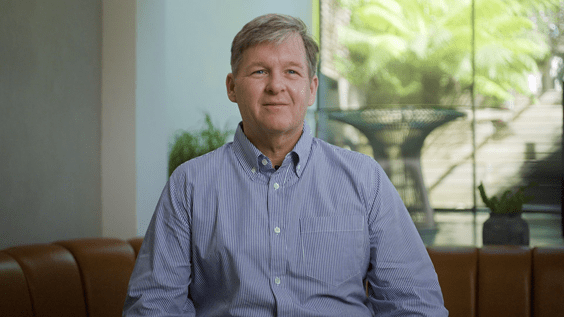
Mike Seidenberg 00:00:00: Quantum computing isn't just about fast computing, it's really a different modality that introduces a new variable into the equation. It's not just solving problems, it's a completely new and different way of compute. It's an exciting space, but we are early, and that's a different type of situation that investors need to consider.
Cherry Reynard 00:00:32 : Hello, I'm Cherry Reynard and welcome to Silicon Valley Bite Size where we discuss, chew over and get into the weeds of some of the biggest trends in tech investing. In this episode, we're looking at one of the most talked about but least understood areas in technology quantum computing. It's often described as the next frontier, a technology that could solve problems beyond the reach of today's computers. Governments are investing heavily and expectations are high. But what about from an investment perspective? I'm joined by Mike Seidenberg, lead manager of the Allianz Technology Trust. Mike, great to have you here.
Mike Seidenberg 00:01:10: It's great to be here.
Cherry Reynard 00:01:11: So, Mike, let's start with the basics. What makes quantum computing different from normal computing? The computers we use today.
Mike Seidenberg 00:01:20: It's an entirely new way to compute in that today's computers use binary outcomes 1 or 0 when they're programming with quantum, you add a new variable into the equation. So you have a multitude of possibilities. But with that becomes a lot of challenges such as reliability needs to skyrocket in order for quantum to work effectively, which means your margin for error really goes down. Just from an engineering perspective as they're building the systems. Quantum computing isn't just about fast computing. It's really a different modality that introduces a new variable into the equation. So it's not just ones and zeros okay.
Cherry Reynard 00:02:10: And so so it's not just about speed. It's about solving different kinds of problems.
MS: Much cheaper. I mean, I don't know about you, but when I actually see SpaceX land a rocket, I mean, my head just pops off. It is just what is required in order to facilitate that and to execute on that is really mind boggling.
Mike Seidenberg 00:02:16: 100% is not just about speed. It is really being able to look at problems in a different way by use of, you know, using the quantum computing to solve that.
Cherry Reynard 00:02:30: And so what might those problems be? What could quantum computing do that a ordinary computer couldn't?
Mike Seidenberg 00:02:37: Sure. When you look at a, a, an equation that has a very complex equation that could take a normal computer, you know, call it, you know, whatever days or weeks to figure out quantum should be able to solve that same problem in a much shorter time period and more real world applicable aspect would be something, you know, trying to predict some type of weather pattern and using quantum in order to kind of think through the kind of what do we think is most likely to happen here. And then there are a lot of a lot of use cases around financial systems and encryption.
Mike Seidenberg 00:03:18: It's not just solving problems. It's a completely new and different way of compute. The quantum space reminds me a lot of other spaces in technology where you have a lot of excitement about the potential, but with that comes a lot of companies that are, you know, just that they are stories about potential. And where that potential is relative to the commercialization is a long distance. So like we do in other sectors, we're going to be methodical. We're going to be deliberate and have a process and really gravitate towards those companies that can execute on commercialization. It's an exciting space, but we are early and that's a different type of situation that investors need to consider.
Cherry Reynard 00:04:07: So there's clearly a lot of excitement around it. Governments are investing even the UK government's investing I believe. But how real is it from an investment perspective? Is anybody making money from it yet?
Mike Seidenberg 00:04:21: That's the right question we should be asking and the one we're trying to solve. It's still early days. Now I will tell you, they've been talking about quantum computing for the last call it 12 to 15 years.
Mike Seidenberg 00:04:35: It's the most real from a commercial viability space it's been in my career, but it's still early days and we don't know the opportunity in order to make it a viable business model yet.
Cherry Reynard 00:04:50: So is this a bit like AI where you get the technology in place, and then there's a period where everyone's kind of working out what you can do with it.
Mike Seidenberg 00:05:00: I think in this example, the use case is there. The challenge is around execution of the actual, you know, unit that needs to be built. And there are a lot of things that go into that. One of which is the amount of heat that's created vis-a-vis this modality of compute. You have to look at things like super cooling the system that's technologically challenging. You have to look at things, and I mentioned this earlier about the error rate of the chips in that you have to be much more precise than we do in linear computing. So, you know, we have a use case we just now need to execute on building it. But that's not trivial.
Cherry Reynard 00:05:46: Okay. So I mean again that that's a bit like AI and data centres, where you're reliant on actually some quite old fashioned stuff like water and energy and things like that.
Mike Seidenberg 00:05:57: I mean, a lot of things in technology are very dependent on those of old fashioned things, and those can become bottlenecks like we're seeing today in the data centre in that just getting enough power, right, just getting enough backup power to a data centre. Obviously cooling is a huge issue. Just to be clear, we're not investing in the cooling companies. But yeah, those are, you know, a lot. You know, all of these things require power.
Cherry Reynard 00:06:25: Yeah. Okay. So this isn't something that's about to change the landscape overnight or even…
Mike Seidenberg 00:06:32: No, I don't think. I don't think we're there yet. To be honest with you.
Cherry Reynard 00:06:37: So one area in which they talk about quantum a lot is security. So why is quantum computing particularly relevant?
Mike Seidenberg 00:06:44: It has the ability to break most encryption, and therefore that's a huge concern for financial institutions. If you think about, you know, something like cryptocurrency, where people, you know, never assume that the actual encryption could be broken. So there is a high level of interest into whether or not it becomes viable. And what does it do to some of these existing systems? Which could be, you know, kind of a, a fairly vulnerable situation.
Cherry Reynard 00:07:20: Okay. So that it actually could be very disruptive in some areas.
Mike Seidenberg 00:07:25: Yeah. And therefore I think you'll see the cybersecurity companies really if it becomes more commercially viable, look to use quantum to basically help protect some of the existing encryption.
Cherry Reynard 00:07:39: Okay. So from a tech investor point of view, how should we think about investing in something like this? That is super early stage and not yet proven and that kind of thing.
Mike Seidenberg 00:07:52: So whenever I hear the word super early, I immediately think, caution. So, you know, we are doing, diligence on a number of companies The most interesting thing to me are the companies who are closer to commercial viability than the ones that aren't. You know, as you can imagine, there's a lot of excitement. And where there's excitement, there tends to be a lot of speculation. and, you know, we're really focused on the companies where we think they have the quickest path to market with respect to, you know, being able to have a system that they can actually sell versus a concept they're trying to sell.
Cherry Reynard 00:08:34: Yeah, absolutely. So this is more about preparation, making sure you understand it all. Okay. so just finally, what if there was one takeaway for investors thinking about quantum computing? What would it be?
Mike Seidenberg 00:08:51: I mean, if it becomes viable, it's it really changes the game. you know, I still think it's TBD. And therefore, I would encourage investors to really kind of take a step back and think about what they're hearing versus what they're actually seeing.
Cherry Reynard 00:09:11: Yeah. Okay. Sensible approach. Okay. We'll wrap up there. Thank you so much, Mike, for joining us.
Mike Seidenberg 00:09:16 : It's great to see you.
Cherry Reynard 00:09:17 : Now if you'd like to learn more about how Allianz Technology Trust approaches emerging technologies like quantum computing, as well as other long term growth themes, you can find full portfolio details, insights, and performance information on the Allianz Technology Trust website. And if you're enjoying Silicon Valley bite size, please like, subscribe and follow the series. Thanks for joining us.